Today as our country spins further into self-induced insanity, I thought I’d talk a bit about (drumroll) data centers! This is ordinarily a rather dull topic to most, consisting of equipment and deployments and connectivity, hardware and software and systems, processors and networks, and of course, operating systems.
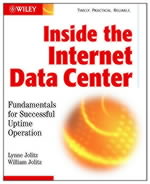
Since it is a dull but necessary topic that keeps things running, I could not resist writing about them back in the day. I even put together a book for Wiley entitled Inside the Internet Data Center in the early 2000s which predicted many Internet issues from the perspective of the data center administrator and how to deal with them. It was an enjoyable exercise. Unfortunately, the publisher decided it was an uninteresting field of study and canceled the book. I got to keep the advance and soon moved on to other projects. But data centers will always hold a fond place in my technology heart.
Now, everyone is talking about data centers. But not fondly. Not as an intellectual exercise. Nope, they are talking about them as technological marauders, stealing power and water and land from ordinary citizens in small towns. These entities are placed without any consultation or approval of the citizens in their communities. And the deals for taking the land and power and water are too often under nondisclosure, meaning nobody knows until it’s too late.
The big players in AI – Nvidia, Meta, Google, Amazon, OpenAI, and Microsoft – are now seen as the faces of villains. It’s a PR disaster for Silicon Valley. And yet, this is the endgame move. There are lots of pieces and players – and billions of dollars involved.
At the core, a data center is simply a processor receiving a request, accessing a database entry, and sending a result back. The devil is in the details. And there are a lot of devils, ranging from the actual hardware management and maintenance, to connectivity requirements, to database management, update and integrity — not to mention the software and operating systems that superintend these functions.
These operations require power. Lots of power. And they produce heat. Lots of heat. Hence the massive power and water requirements. And the increased demands of AI mean even more power and water for those AI chatterboxes telling folks that they can do no wrong, even though the actual interactivity to the end user is essentially meaningless.
According to McKinsey, almost $7 trillion will be invested in data center acquisition and development by 2030, $3 trillion in real estate and power infrastructure and $4 trillion in “computing hardware infrastructure” ($3.5T in servers and $.8T in storage). This is a mind-boggling number of processors.
Nvidia as the leading vendor of GPUs is beyond excited. At GTC this week, Nvida CEO Jensen Huang hailed these numbers, claiming he sees “at least $1 trillion” in revenue from Nvidia products through 2027. “I am certain computing demand will be much higher than that.” As Motley Fool noted, “This is startling — in a positive way — as it comes only five months after his earlier forecast, suggesting enormous momentum in orders in recent months. Also, Huang’s words imply that, from what he’s seen so far, he thinks revenue could surpass the level of $1 trillion.” If so, McKinsey’s predicted spend is underestimated.“
The real estate side of the equation is equally compelling. Data center REITs are all the rage. While partners in these ventures are often carefully shielded from local scrutiny, huge funds are usually involved in the acquisition of land and construction of essentially a bunch of big concrete shells. Rural locations are targeted. Land is cheaper in rural locations. Political resistance is diluted. And oftentimes water available for agriculture can be recaptured for equipment cooling. In addition, it is easy to buy a few local officials (and relatively cheap) and obtain through strong-arm tactics power easements to the datacenter.
When large corporations come into a community, they usually attempt to co-opt it by selling folks on jobs. However, once the datacenter shells are put together, there really isn’t much of a need for unskilled or semi-skilled labor. A large data center requires very few on-site personnel. Most software and systems administration is done remotely by engineers. Hardware failover means that a lot of CPUs and GPUs can burn out without having to swap out the damaged equipment.
The modern data center isn’t a factory with people working in shifts and products trucked to customers. It’s a factory for analyzing your most personal secrets, foibles, and thoughts, circumscribing every purchase you make and every comment you write, and monetizing it.
If fund managers believe that $4T in real estate is worthwhile, think of what value they place on your personal data. To get a 10-fold investment return, youre looking at the data value of literally hundreds of trillions of dollars estimated. These numbers rival the GDPs of major countries and blocks, with the US, China and the European Union in the $20 trillion economy group. That’s two countries and one economic block.
Now, these numbers are incredible, but also quite ephemeral. The same value of data of citizens incorporated implicitly in GDP as a complex factor is often claimed as a pure monetary value by AI enthusiasts. Nope, this isn’t the ROI. It’s about controlling the mindspace of investors and securing current investments.
What is real and tangible is the resistance of data center construction in communities throughout the US. And that antipathy has gone hand-in-hand with increased public fear of AI used for government surveillance. And most certainly some of the biggest advocates for its use have been companies like Palantir. People don’t like being reminded they’re being watched, even though that’s what the “free Internet” has been all about.
AI advocates have touted AI as the means for companies to find and fire people because they’re no longer needed. Lots of people. Huge numbers of people. This doesn’t make folks worried about their next paycheck feel real good about it. Especially when they open up their power bill and find it’s gone way up because a datacenter in their area has raised costs for everyone.
And finally, the debacles of AI misinformation from overeager AI advisors have become a joke, and a mean one at that. AI for the masses is not a trusted source.
This is how the standing of Silicon Valley companies has plummeted — not in terms of the stock market, but in terms of their trustworthiness.
William and I discussed the benefits of AI and data centers many years ago. Those benefits haven’t changed. But the mishandling, greed, and sheer contempt of major players in Silicon Valley and large investment funds have frittered away the goodwill and obscured the benefits.
It’s too bad. I really do like data center design. I like the software. I like the systems. I like the hardware. I like the benefits of AI.
But I don’t like the companies and pundits. Nobody does.